
Being nervous about snow and ice is common, and a little of it is sensible. If you are scared to drive in snow, you are not alone. The most helpful steps are to prepare well, use calming skills that work while you drive, practise in safe conditions in small steps, and remember that choosing not to drive in a storm is a valid decision.
This guide is for Ontario drivers who dread the first snowfall, or who feel panic or avoid the road when winter arrives. It will help you tell caution from anxiety, plan ahead, stay calm in the car and build confidence at your own pace.
Why driving in snow can feel so frightening
Many people feel this way, especially after a long stretch of mild weather when winter driving feels like a skill you have forgotten. Winter roads really are different. Traction changes, visibility drops, stopping takes longer and other drivers may not slow down. If you have ever skidded or been near a crash, your mind may replay that moment every time the snow starts.
Anxiety also tends to focus on what could go wrong. One early study of people with driving fears found that many had high expectations of negative events while driving. It described two main kinds of fear. One was based on danger, such as a crash. The other was based on feeling anxious and on unpleasant driving situations. The study was small and preliminary, but it shows how common it is to worry about both the road and your own reaction to it.
So fear of driving in winter often has two parts: the real conditions outside the car and the alarm going off inside you.
Healthy caution or anxiety that is taking over?
The Centre for Addiction and Mental Health says a certain amount of anxiety is normal and can protect you from harm. Everyday anxiety is generally occasional, mild and brief. It becomes a bigger concern when it is more frequent or more intense, or when it starts to limit your life.
Here is one way to tell them apart:
Caution changes your plans for real conditions. You leave early, drive slower or stay home during a storm.
Anxiety that is taking over shows up as days of dread, panic in the car, or avoiding driving even on clear roads.
Winter driving anxiety can also spread. You start by skipping storms, then skipping any cold morning, then avoiding driving at all. If that sounds familiar, it is a good time to get support. Our post on anticipatory anxiety explains the dread that builds before a drive.
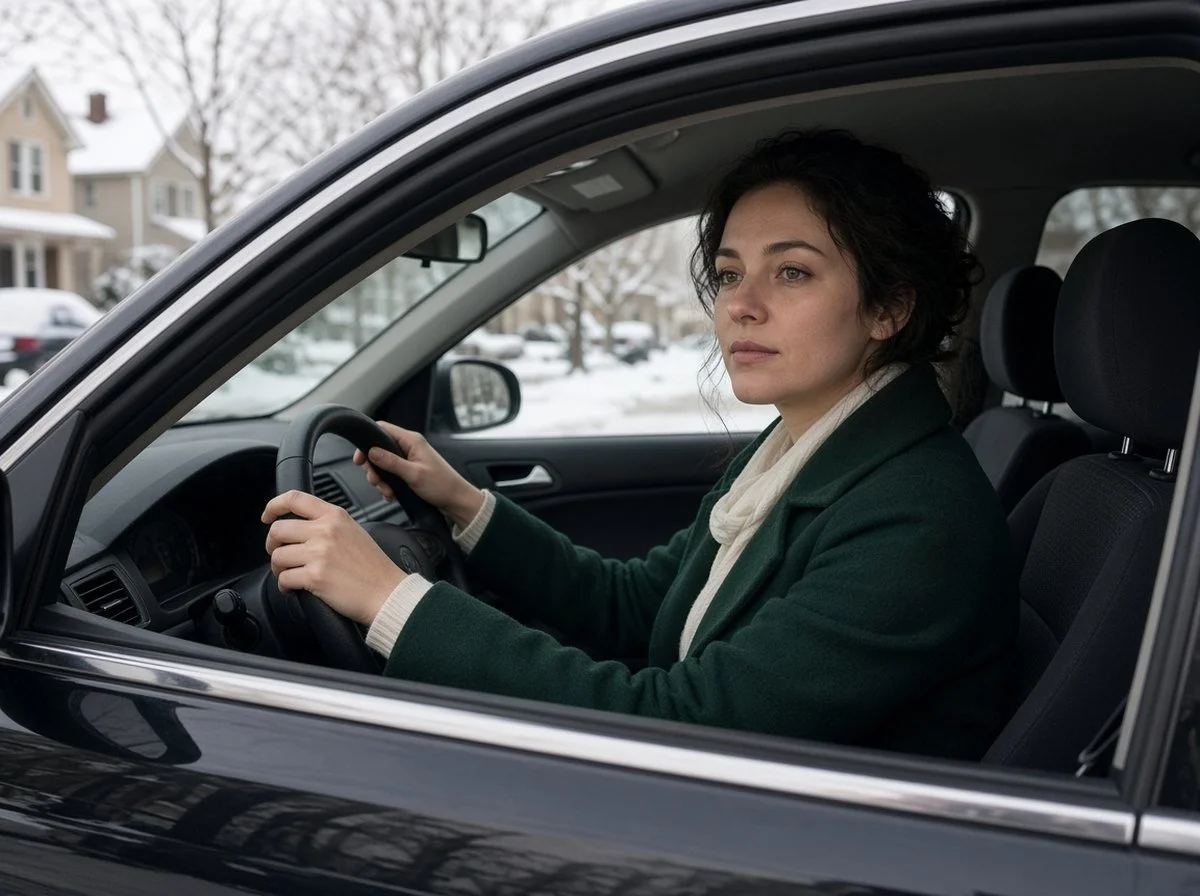
Prepare before you go
Good preparation lowers uncertainty, and uncertainty feeds fear. Ontario.ca has clear winter driving guidance. Here are some steps drawn from it:
Check the forecast and road conditions. If conditions look bad, delay your trip if you can. Ontario 511 shows road conditions on provincial highways.
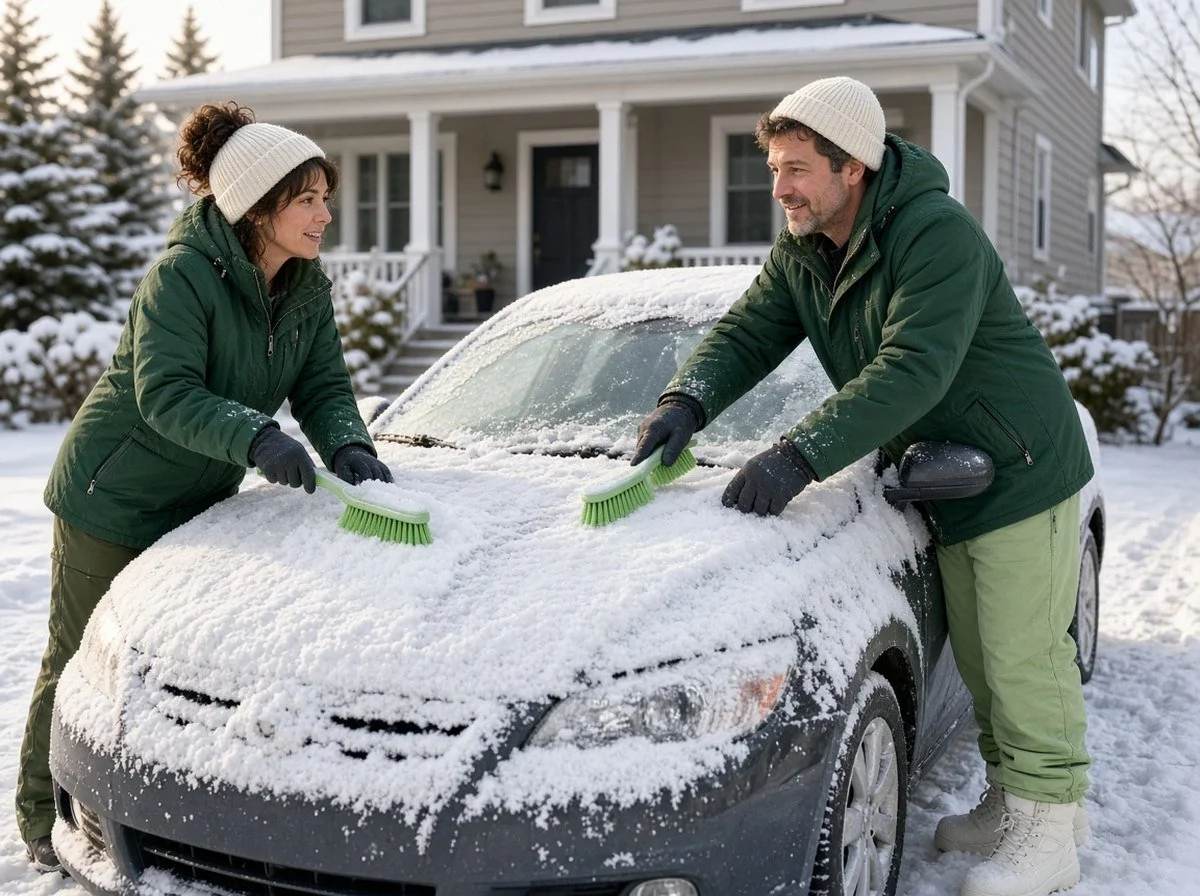
Clear your car. Remove ice and snow from your windows, lights, mirrors and roof.
Get your vehicle winter-ready. Ontario.ca recommends a maintenance checkup and keeping the fuel tank at least half full.
Pack a winter kit. Ontario.ca suggests items such as a charged phone, water, food, a flashlight, a blanket, warm clothes and a shovel.
Leave extra time. Rushing makes anxiety worse, and Ontario.ca notes that many winter collisions happen because drivers go too fast for conditions.
Knowing that you have done what you can often makes the first few minutes of a drive feel calmer. It also gives you a clear plan if the weather turns, so you are not deciding everything in the moment.
Calming skills for the drive
These skills keep your eyes on the road and your hands on the wheel. Never close your eyes or do any exercise that takes your attention off driving.
Slow exhale. Breathe in through your nose, then breathe out slowly through your mouth, a little longer than you breathed in. Keep looking at the road.
Loosen your grip. Check your shoulders and hands. If they are tight, soften them a little.
Steady self-talk. Say a calm phrase in your head, such as “I’m driving slowly and I’m prepared.” Try not to jump to the worst case. Catastrophizing, or jumping to the worst case, feeds the fear, so gently bring your mind back to what is happening right now.
Keep the car calm. Keep music low or off, and avoid distractions.
Pull over if panic builds. Find a safe place, stop and breathe until it passes. It is okay to wait.
Anxiety driving in snow can make your body feel unsafe even when you are driving well. These skills help your body settle while you keep your attention where it belongs.
Build confidence one small step at a time
If you want to know how to overcome fear of driving in snow, the answer is gradual. Pushing yourself into bad conditions to face the fear is not safe and often backfires. Try small steps instead, only when roads are clear enough and you feel safe:
Sit in the parked car and practise your slow breathing.
Drive in an empty lot after it has been plowed, in daylight.
Take a short, familiar, cleared route with a calm passenger.
Slowly add a little more distance or a slightly busier road.
Step back on rough days. A setback does not erase your progress.
Praise yourself for each step. Small, repeated wins teach your mind that you can handle more than it feared.
If you decide not to drive
Staying home in a storm can be the right call. Rides from a friend, transit or delaying a trip are all fine choices when roads are bad, and Ontario.ca says to delay your trip if conditions look bad and you can.
Avoidance becomes a problem only when it takes over. Ask yourself: Am I skipping clear days too? Am I turning down things I care about? Is the dread starting days before a storm? If you answer yes, it may be time to get help.
When a past winter crash is behind the fear
Fear after a winter collision is very common. You may feel shaky, replay it in your mind or feel a jolt when you hear a car slide. You do not need a crash to be afraid, though. The same early study found that people who had been in a crash and those who had not did not differ much on measures of fear severity.
If a crash is part of your story, our post on anxiety after a car accident may help. If the fear is lasting or you are having flashbacks, counselling can help you work through it at your own pace.
How counselling can help
Counselling can help when winter driving anxiety is shrinking your life. We can work on what your fear is telling you, teach calming skills and help you plan gradual steps. Counselling may include gradual practice at a pace that feels manageable, and it can help whether your fear started with a crash or with nothing you can name.
We see people at our Kitchener-Waterloo, Cambridge and Ottawa offices and online. Online counselling can be a handy option on stormy days, when you do not want to drive anywhere.
Your next step
If winter roads fill you with dread, book a free 15 minute consultation, in person or online, to talk about what would help. It is a chance to ask questions and see whether counselling fits. Booking does not commit you to anything, and the call is not a therapy session or a crisis service.
If anxiety has become overwhelming or you are having thoughts of suicide, call or text 9-8-8, any time. In an emergency on the road or anywhere, call 911.
Last reviewed: November 2026