
You notice your child go quiet after checking their phone. Maybe they flinch at a notification, or suddenly quit a game they loved. Then you find out: someone has been targeting them online. Cyberbullying can leave parents feeling scared, angry and unsure what to do first. This guide explains what cyberbullying is, the signs to watch for, how it can affect kids and teens, how to have the first conversation, what to save and report, how to work with the school and when counselling can help.
This post is general information, not a diagnosis or legal advice. Only a qualified professional can assess what your child is going through.
What is cyberbullying?
Cyberbullying is hurtful behaviour that happens through phones, apps, games or the internet, usually again and again. It can include:
Mean or threatening messages, comments or posts
Leaving someone out of group chats or online games on purpose
Spreading rumours online
Pretending to be someone else to embarrass them
Sharing photos or videos without consent
The Government of Ontario notes that cyberbullying can also include online exploitation, like sharing intimate images without consent (see Sources).
A single argument between friends is not always bullying. Bullying usually involves a pattern and some kind of power imbalance, like a group against one person. That said, a one-time post can still do serious harm if it spreads widely. Trust what you see in your child.
Signs of cyberbullying a parent might notice
Many kids and teens don't tell their parents about bullying. They may feel embarrassed, worry you'll overreact or fear losing their phone. So signs often show up in behaviour instead. Signs of cyberbullying can include:
Seeming upset, angry or scared after using a phone, tablet or computer
Hiding the screen or closing apps when you walk by
Suddenly quitting an app, game or group chat
Not wanting to go to school, or feeling sick on school days
Changes in sleep, appetite or mood
Pulling away from friends or family
Losing interest in things they used to enjoy
These are signs, not proof. Many things can cause them. But if you notice several at once, it's worth checking in gently.
Effects of cyberbullying on teens and kids
Cyberbullying can hit hard because it follows kids home. In the past, a child could leave bullying at the school door. Now it can arrive at the dinner table or at 2 AM. Posts can be shared widely and seen again and again.
Research links being cyberbullied with more anxiety and depression in young people (see Sources). A link is not the same as a cause, but it shows why this matters. Many young people who are bullied online are also bullied in person, so the hurt can come from more than one direction. If you're noticing worry or nervousness in your teen, our post on signs of anxiety in teenagers can help you know what to look for.
The good news is that support from caring adults is one of the things that can protect kids. You matter a lot here.
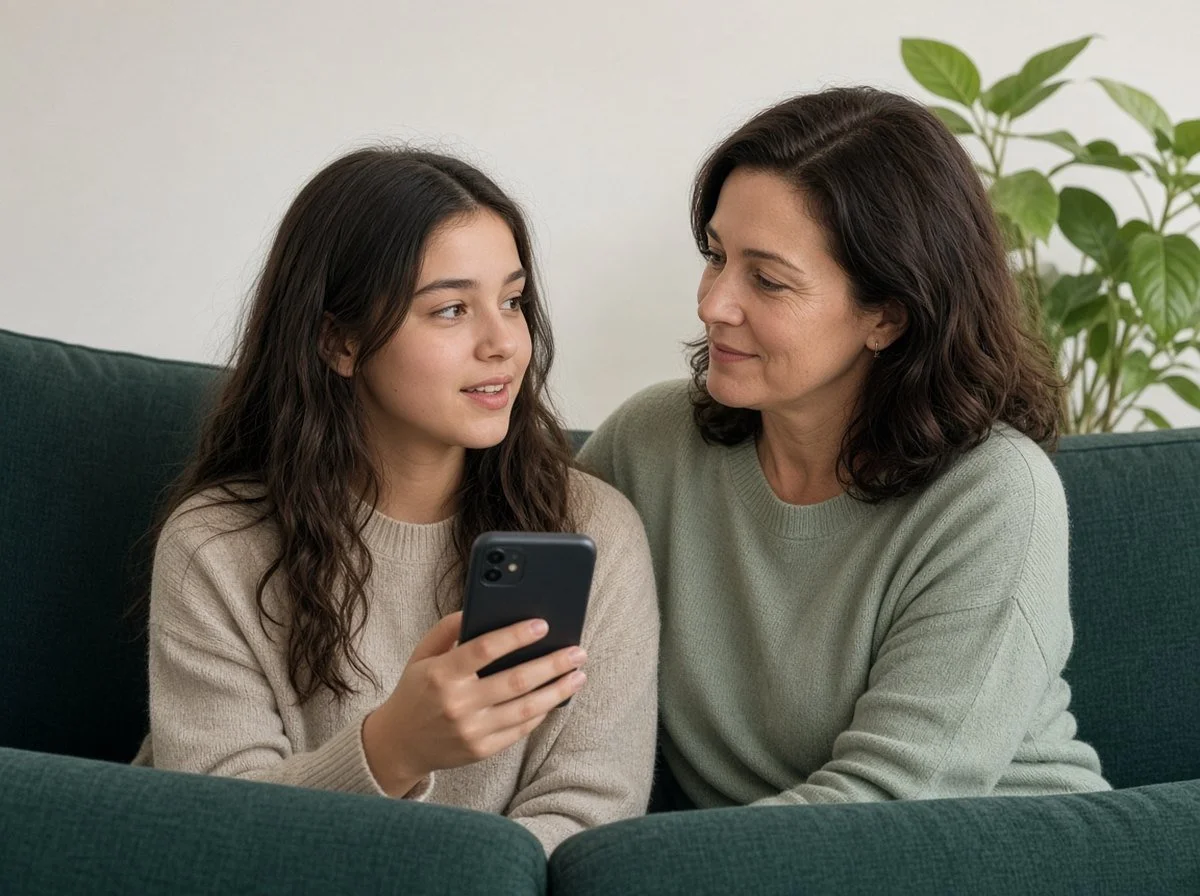
What to do if your child is cyberbullied: the first conversation
How you react the first time can shape whether your child comes to you again. A few tips:
Stay calm, at least on the outside. It's normal to feel furious. Try to take a breath before you respond.
Listen first. Let your child tell the story in their own words. Try not to interrupt or jump to fixing it.
Thank them for telling you. Say something like, "I'm really glad you told me. This isn't your fault."
Don't take the phone away as a punishment. Many kids hide bullying because they fear losing their device. If telling you means losing their phone, they may not tell you next time.
Make a plan together. Ask what they want to happen. Older kids and teens especially need a say in the next steps.
You don't have to solve everything in one talk. The most important message is: "You're not alone, and we'll figure this out together."
Save it, block it, report it
Once you know what is happening, there are a few practical steps.
Save it. Take screenshots of messages, posts and profiles. Make sure the date, time and username are visible. Keep them in one safe place. This record can help if you talk with the school or the app.
Block it. Help your child block or mute the people involved. Most apps and games have these tools in their settings.
Report it. Use the reporting tools in the app, game or website. Many platforms remove content that breaks their rules.
Don't reply or fight back. Responding can make things worse and may get your child in trouble too.
Know when it's more serious. If there are threats of violence, or sexual images of your child are involved, you can contact police. If your child is in immediate danger, call 911.
For broader questions about how much screen time is healthy, our post on screen time and teen mental health may help.
Working with the school
Cyberbullying often involves classmates, even if it happens outside school hours. In Ontario, principals must respond to inappropriate or disrespectful behaviour on and off school property, including cyberbullying (see Sources).
When you contact the school:
Ask for a meeting with a teacher, guidance counsellor, vice-principal or principal.
Bring your screenshots and a short summary of what happened and when.
Stay as calm and factual as you can.
Ask what the school's plan is and how they will keep your child safe.
Agree on a time to follow up.
If the bullying doesn't stop, follow up with the principal to check that the agreed steps are happening. Keep your child in the loop, so they know what is being done.
If the bullying happens during sports or after-school activities, speak with the coach or leader too. Working with the adults around your child sends a clear message: what happened is not okay, and your child has people on their side. It also shows your child how to stand up for themselves in a calm, steady way.
When counselling can help
Sometimes the bullying stops, but the hurt stays. Counselling can help if your child:
Still seems withdrawn, anxious or low weeks later
Has trouble sleeping or going to school
Talks about themselves in very harsh ways
Seems angry, shut down or not like themselves
Our therapists see children from age 6 and teens. You can learn more about counselling for teens, and we also offer counselling for children. Sessions can be in person or online.
Parents need support too. Watching your child get hurt is painful, and it's hard to know what to say. Parent coaching can help you find the words and plan your next steps. The free consultation can match your family with a therapist who fits.

Cost, billing and your first step
Sessions with our therapists range from $130 to $200, depending on the clinician.
We accept Health Spending Accounts (HSAs).
We can direct bill many insurers. Coverage depends on your plan, so check with your insurer before you start.
Book a free 15-minute consultation with our admin team. Let them know your child or teen is dealing with cyberbullying, their age and whether you'd prefer in person or online.
If your child talks about suicide or self-harm, call or text 9-8-8, or 911 in an emergency.
If you're in crisis: if you or someone you love is in immediate danger, call 911. If you're thinking about suicide, call or text 9-8-8 any time, day or night.
Last reviewed: October 2026
Sources
Umbrella review of meta-analyses on the risk factors, protective factors, consequences and interventions of cyberbullying victimization, Nature Human Behaviour, 2025
Traditional bullying and cyberbullying in the digital age and its associated mental health problems in children and adolescents: a meta-analysis, European Child and Adolescent Psychiatry, 2024
Bullying: we can all help stop it, Government of Ontario