
Your child slams a door, yells "I hate you!" or throws a toy across the room. In the moment, it can feel shocking, upsetting or even scary. You may wonder, "Why is my child so angry?" Anger in children is common, and it is often a signal that something else is going on underneath. This post looks at what often sits under a child's anger, what is typical at different ages, skills to build between outbursts, how to set calm limits and when it may be time to get extra help.
This post is general information, not a diagnosis or medical advice.
Why is my child so angry, and what sits underneath?
Anger is a normal feeling. Children feel it just like adults do. But young children do not yet have the words or skills to explain what is bothering them. So the anger comes out in their bodies and their behaviour.
Many experts describe anger as the tip of an iceberg. What you see on top is the yelling or the hitting. Underneath, there is often something else, such as:
Frustration. A puzzle that will not fit, a sibling who will not share or a task that feels too hard.
Tiredness or hunger. Many outbursts happen before meals, after school or near bedtime.
Worry or fear. Anxiety in children can come out as anger, especially around change.
Feeling that something is unfair. Children care a lot about fairness.
Feeling left out or hurt. A friend who said something mean, or not being invited to a party.
Trouble with attention or learning. A child who struggles in class may hold it together all day and then fall apart at home.
When you start to see anger in children as a signal worth decoding, it can be easier to stay calm and curious.
What anger looks like at different ages
Anger looks different as children grow.
Toddlers and preschoolers. Tantrums are a normal part of development. The American Academy of Pediatrics notes that they happen most between ages 1 and 3, and that some children have far more than others (see Sources). Hitting, biting, crying and dropping to the floor are common at this age.
School-age children. Angry outbursts in children at this age may look like yelling, slamming doors, stomping off or saying hurtful things like "I hate you" or "You're the worst." Some children argue a lot or refuse to do what is asked.
Older children and preteens. Anger may come out as eye-rolling, sarcasm, silence or bigger arguments about fairness and freedom.
For most children, outbursts get less frequent and less intense as they grow and learn new skills. The National Institute of Mental Health notes that many changes in mood and behaviour are a typical part of growing up (see Sources). If your child is a teen, our post on how to handle an angry teenager covers that stage.
How to help a child with anger, between outbursts
The middle of an outburst is not a good time to teach new skills. Your child's thinking brain is offline. In the moment, the main job is to keep everyone safe and stay as calm as you can. The real learning happens later, when everyone is calm.
Here are some ideas for how to help a child with anger between outbursts:
Name the feeling. Help your child put words to what they feel. "You seemed really mad when your tower fell over." Over time, this helps them say "I'm mad" instead of hitting.
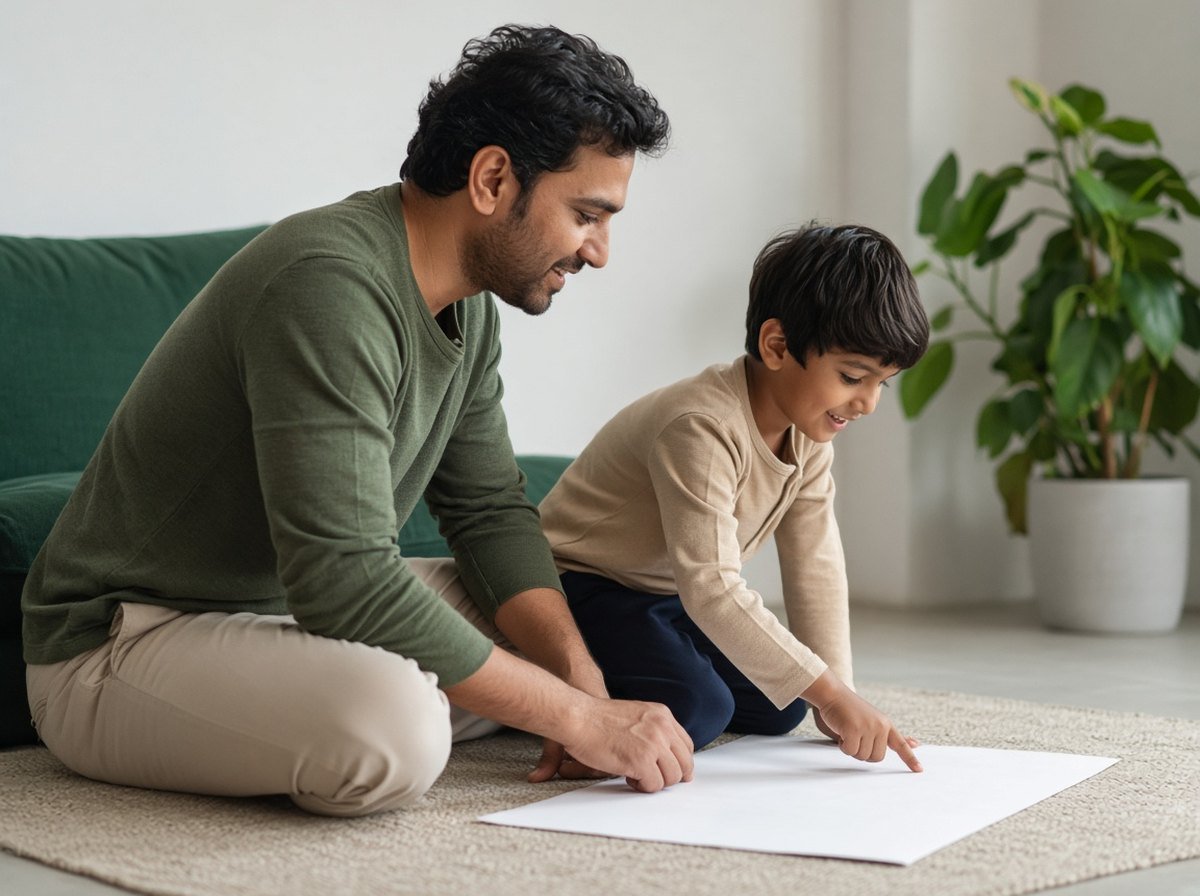
Use a feelings thermometer. Draw a thermometer with colours or numbers, from calm at the bottom to very angry at the top. Talk about what each level feels like in the body, such as a hot face, tight fists or a fast heart.
Look under the iceberg together. On a calm day, draw an iceberg. Write "angry" at the top, then ask what might be underneath, like tired, embarrassed or left out.
Make a calm-down plan together. Choose a few things your child can do when they feel the anger rising. That might be taking five slow breaths, squeezing a pillow, getting a drink of water or going to a cozy corner.
Practise when calm. Anger management for kids works best like any other skill: with lots of practice when things are easy. Try the breathing or the calm corner during play, so it is familiar when it is needed.
Clear limits without more anger
Anger is okay. Hurting people or things is not. Children need both messages.
Keep the rule simple. "You can be mad. You can't hit." Say it calmly and the same way each time.
Give clear instructions. Short, direct requests work better than long lectures. "Please put the blocks in the bin" is clearer than "Why is this room always such a mess?"
Use brief, calm consequences. A review of parenting studies found that brief, calm responses to not listening, such as a short time-out or briefly ignoring the behaviour, increased how often children followed instructions (Leijten and colleagues, 2018, see Sources). Consequences work best when they are short, predictable and not delivered in anger.
Repair afterward. Once everyone is calm, reconnect. A hug, a short talk or a fresh start lets your child know the relationship is still safe. If you lost your temper too, it is okay to say, "I yelled, and I'm sorry. Let's try again."
Notice the good moments. Warm attention when your child handles something well is good for your relationship, even though research suggests praise on its own does not make children follow instructions more.
When to worry about your child's anger
Most anger in children is a normal part of growing up. But sometimes it is a sign that a child needs more support. It may be time to talk to a professional if:
Outbursts are very frequent, intense or last a long time
Your child often hurts others, themselves or pets
Your child breaks things on purpose often
Anger is causing problems at school or with friends
Your child seems irritable or unhappy most of the time
There are changes in sleep, appetite or interest in things they used to enjoy
The anger is getting worse, not better, over time
The National Institute of Mental Health lists frequent tantrums and being irritable much of the time as signs that a child may benefit from an evaluation (see Sources). You know your child best. If something feels off, it is worth asking.
How counselling can help your family
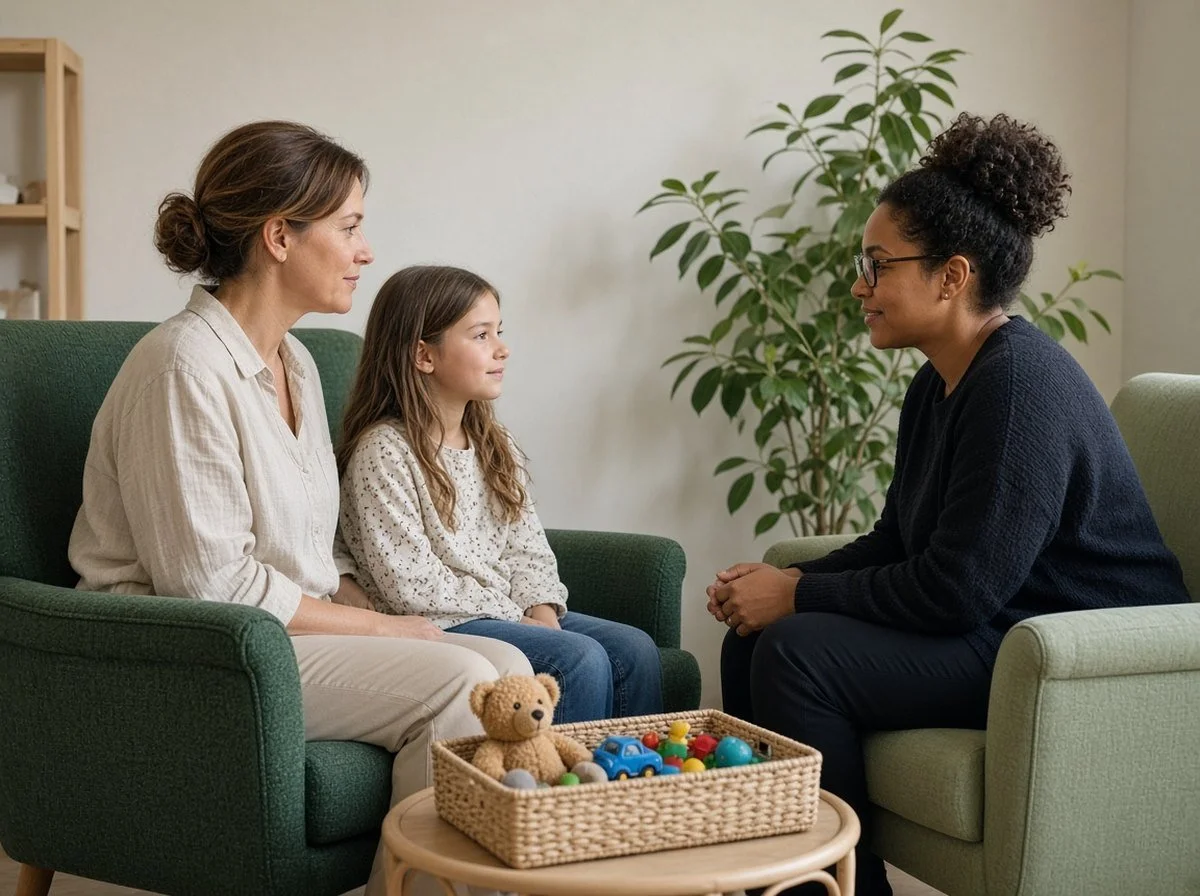
A counsellor can help you understand what is behind your child's anger and give your family new tools. Depending on your child's age, counselling may include:
Play-based sessions where younger children can show their feelings
Helping children name feelings and build calm-down skills
Working with parents on limits, routines and repair
Family sessions to practise new ways of talking
Our child and family counselling page explains how we work with children and parents. Sessions are available in person and online.
Common questions about anger in children
Is it normal for my child to be this angry? Anger is a normal feeling, and tantrums are a normal part of development, especially between ages 1 and 3. If outbursts are frequent, intense or getting worse, it is worth checking in with a professional.
Should I punish my child for being angry? No. The feeling is okay. Calm, brief consequences are for hurtful behaviour, not for the feeling itself.
How can I help my child calm down? Practise skills like slow breathing and a calm-down spot when your child is calm, so they are ready when anger rises.
Can counselling help with anger in children? Yes. Counselling can help children build skills and help parents feel more confident.
Cost, billing and your first step
Sessions with our therapists range from $130 to $200, depending on the clinician.
We accept Health Spending Accounts (HSAs).
We can direct bill many insurers. Coverage depends on your plan, so check with your insurer before you start.
Book a free 15-minute consultation with our admin team. We can help you find a counsellor who works with children and families.
If you're in crisis: if you or someone you love is in immediate danger, call 911. If you're thinking about suicide, call or text 9-8-8 any time, day or night.
Last reviewed: October 2026
Sources
American Academy of Pediatrics, HealthyChildren.org. "Top Tips for Surviving Tantrums." https://www.healthychildren.org/English/family-life/family-dynamics/communication-discipline/Pages/Temper-Tantrums.aspx
Leijten P, Gardner F, Melendez-Torres GJ, Knerr W, Overbeek G. "Parenting behaviors that shape child compliance: A multilevel meta-analysis." PLoS One. 2018;13(10):e0204929. https://pmc.ncbi.nlm.nih.gov/articles/PMC6173420/
National Institute of Mental Health. "Children and Mental Health: Is This Just a Stage?" https://www.nimh.nih.gov/health/publications/children-and-mental-health